

Hey folks, thanks for checking out the newsletter this week. There’s been an awful lot of chatter about prepping in the last couple of weeks. Seems like every talking head with a mic or a social media account is suddenly extolling the virtues of being prepared with food, water, and other necessities. On the one hand, I’m always happy to see prepping get positive press. On the other hand, it’s frustrating to see so many “instant experts” cropping up. Influencers and influencer wannabes who read an article about prepping somewhere and are now somehow an authority on the subject.
Based on comments on one or two of my Facebook posts, as well as discussions I’m seeing in several FB groups, I feel like there’s a fair amount of confusion or conflation happening regarding recent news stories.
Story #1 – The FORTRESS Initiative, which involves several US military bases increasing their capabilities to be able to be 100% self-sufficient for at least 90 days. My understanding is the timeline on this is three years. This is something that’s been in the works for a while, not anything that suddenly happened overnight.
Story #2 – Media outlets are learning that many other countries around the world are recommending their citizens stock up on food, water, and other necessities to be able to meet their needs for anywhere from 3-10 days. This is really nothing new, as these programs have been around for quite some time in some cases. I mean, we’ve had Ready.gov for 23 years or so.
Some people seem to be combining the two and thinking that government agencies are suggesting civilians stock up enough supplies for at least 90 days. That’s not the case at all.
I’m not suggesting you shouldn’t be aware of what’s happening in the world. Nor am I saying prepping is a bad idea. Given my line of work, that would be especially dumb of me. What I am saying is that I’m seeing an awful lot of panic on social media, and that helps nobody. If you’ve been following my advice all along, you’re hopefully in pretty good shape from a prepping standpoint. Take a deep breath. It’s gonna be okay.
I wish I could stomach being more of a raging alarmist. I’d probably sell more books….
* * *
A colleague of mine, Dale Rowley, works in emergency management in Maine. We’re working together on a couple of projects. He recently shared with me some of his training and educational materials he uses for teaching prepping concepts and best practices. One of them is a list of free or low-cost things people can do to get better prepared. Here are a few that I liked.
Sign up for local emergency alerts for your cell phone.
Create and practice a Fire Escape Plan for your home.
Ensure escape routes in your home aren’t blocked.
Take a free training course on emergency preparedness
Take photos/video of property and belongings for insurance purposes
* * *
I did a 30-minute interview about prepping on the Jesse Weber Live podcast last week. Here’s a link where you can watch it. And yes, I’m aware that I desperately need a better webcam.
* * *
Last week, I came across a post in a prepper FB group that ticked me off. The post has since been removed, but in a nutshell a guy was suggesting that you go out and buy a case of cheap canned cat or dog food and stick it in your food storage pantry. If after a disaster someone comes knocking on the door asking for food, you’re to tear the labels from a couple of pet food cans and hand them out.
Why? Because they failed to prepare properly. It’s a punishment, and cruelty is the point. When the guy was questioned in the comments, he tried to walk it back and say that it’s better to hand out pet food than nothing at all. However, if that were the point then why remove the labels and disguise the food in the first place?
I don’t know if the dude was just looking for attention or if this is something he’s genuinely looking to do. Given his strident defense of the plan, I think it’s the latter more than the former.
Here’s the thing. Let’s say dude gives out dog food. At some point, like when they open the cans, the recipients will realize what they’ve been given. They’re also going to remember who gave it to them, and they might want to talk to the dude about it. Bad things could happen at that point.
In other words, what goes around comes around.
If you don’t want to help, fine. But at least don’t go out of your way to make things worse.
* * *
I just saw a notification yesterday that the National Weather Service (NWS) may be using the PDS (Particularly Dangerous Situation) designation with their warning systems this winter.
What does this mean?
According to the NWS post, “This (PDS) will be reserved for storms where there is high confidence in a rare and extreme event.” In other words, if a blizzard or winter storm is expected to be incredibly severe, they might tack on PDS to the warning.
* * *
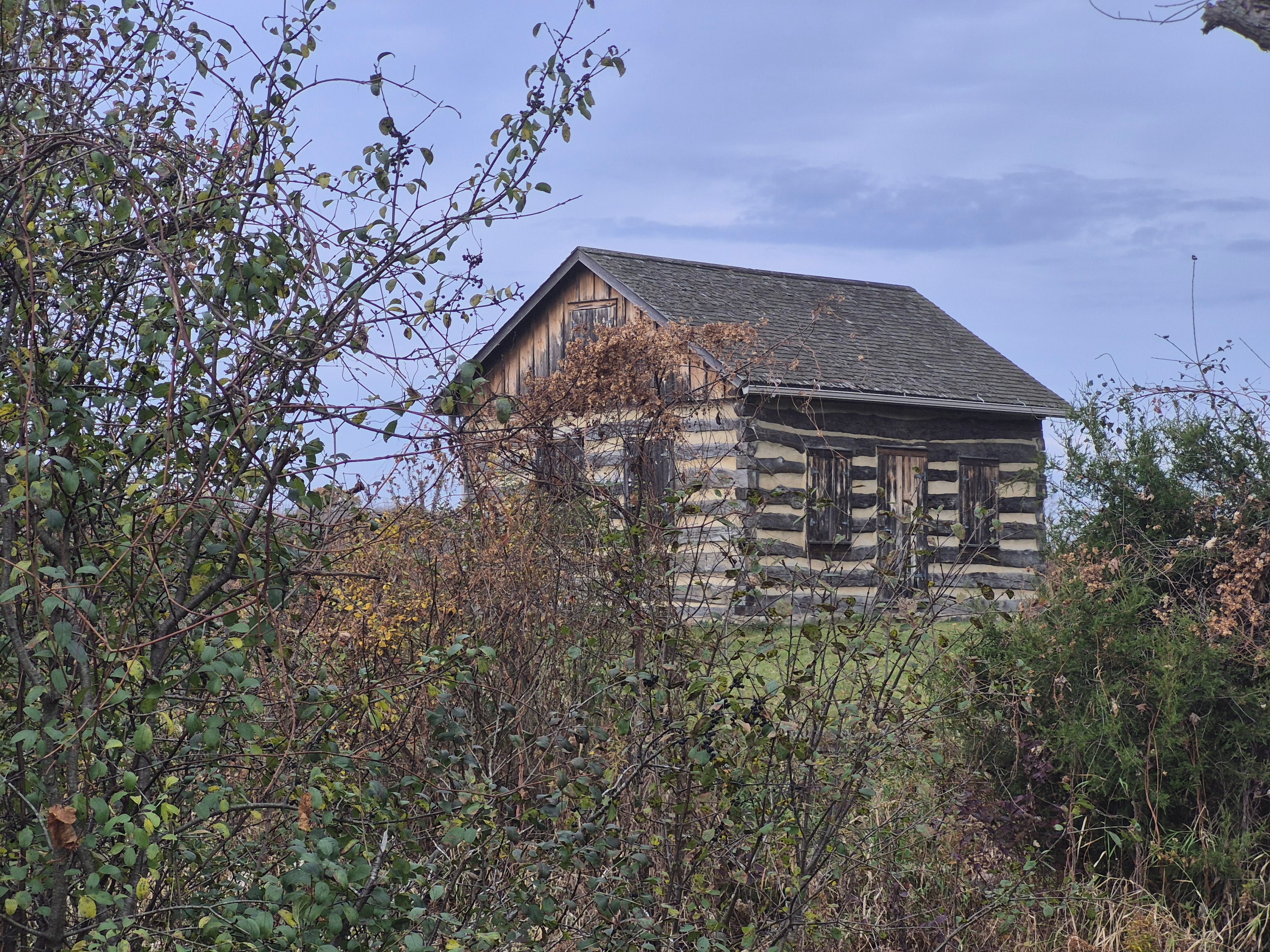
For our hike over the weekend, we went to Paradise Springs Nature Preserve, near Eagle, Wisconsin. It’s been a bit since we’ve visited there. I’d read online that crews were reworking some of the features, and we wanted to check it out. It looked like they’re fixing up the 100+ year old spring house, among other things. I like walking here, but the trail is very short, barely a half-mile. Still, any time spent outside is never wasted. This cabin sits across the street from the nature preserve. It’s on public land and is part of their preservation project.
Survival Tip — Prepping 101
[I know many of you know all this already. But you might have people in your life who are looking for advice as they begin their prepping journey. Consider sharing this with them. You can forward this newsletter by email, or click the Share button at the very bottom.]
With the rapid influx of people who are new to this whole prepping endeavor, there are a lot of questions about where to begin. There’s a lot involved and it can be difficult to know where the priorities lie. What follows is sort of a Reader’s Digest version on how to prep. There’s way more involved with this than can be covered in a short essay. But at the same time, information overload is a very real thing and can lead to analysis paralysis. Take it one step at a time and get the basics covered, then move on from there.
Water
Water can be difficult because you can’t make it lighter nor compress it to a smaller size. Have as much stored as you feel is reasonable, but also have the means to filter/purify additional water sourced from outside the home. I don’t recommend a straw-type filter for this purpose as it is a point-of-use device. Meaning, if you want to filter water to rehydrate food, you’re sucking it through the straw and then spitting it out into your cookpot. Something like the Sawyer Mini is a better solution.
One case of 24 half-liter bottles is a bit over three gallons, if that helps with planning your storage options. You can also refill cleaned soda and juice bottles. While commercially bottled water will last a long time on the shelf, any bottles you refill should be rotated out about every six months. It isn’t that the water goes bad over time, but that the container may develop leaks or may begin to leach chemicals into the water. Glass doesn’t have those problems, but glass also adds considerable weight to the equation.
Keep in mind that nobody has ever complained about having too much clean water on hand in a crisis.
Food
Don’t drop a ton of money on special “survival food” products. They’re expensive and you can get far more bang for your buck at your local grocery store (yes, even today). Stock up on shelf-stable foods your family normally eats, such as canned goods, dry pasta, rice, and pouch soup mixes. Try to have a good variety of things and don’t forget some treats as well.
Learn how to preserve food at home, such as with canning and dehydrating. These allow you to take advantage of sales, where you can buy food and preserve at home for later use.
Freeze-dried or dehydrated camp foods aren’t a bad idea as a backup to your normal foods, but don’t plan to rely on them exclusively for long periods of time. Many of them are high in sodium, among other things.
Medical
If anyone in the home routinely takes prescription medications, talk to your doctor about getting extra you can set aside for an emergency. Or, look at buying some outside the country. If neither of those are an option for you, there is still a way to build up a supply, it just takes time. Refill your script the first day you can, which is usually 3-5 days before you’d run out. Use that overlap for your stockpile, adding to it each month but always using the oldest medications first.
Stock up on OTC medications your family normally uses, such as for cold/flu, stomach ailments, and acid reduction. Put together a first aid kit as well, stocking it with bandages and other wound care products. Consider taking classes in first aid and CPR. Reach out to your local fire department for recommendations on those.
Finances
Do everything you can to get out of debt and stay there. While yes, there is such a thing as “good debt,” that’s beyond the scope of our conversation here. Remember, every dollar you pay in interest is a dollar less you can spend on something fun or productive.
Try to get together an emergency fund that would cover all of your routine expenses for at least a month or two, and keep building on it.
Yes, in a total collapse money will likely be worthless. Until/unless that happens, it for darn sure has value and managing your money well can make life a whole lot easier.
Fitness
Work with your doctor on putting together an exercise program. Lose excess weight and improve cardio as well as strength.
Address health issues as best you can. We all have various health challenges, but do the best you can with the restrictions you have.
Security
Understand that the world isn’t always nice and not everyone has your best interests at heart. Learn how to defend yourself and your family. Strengthen the security of your home by investing in good locks and actually using them.
Weapons are not the enemy and they can save your life. However, owning a weapon that you have clue how to use isn’t much better than not having it at all. Seek out training and get in the habit of practicing regularly.
Backwoods Survival Guide Magazine
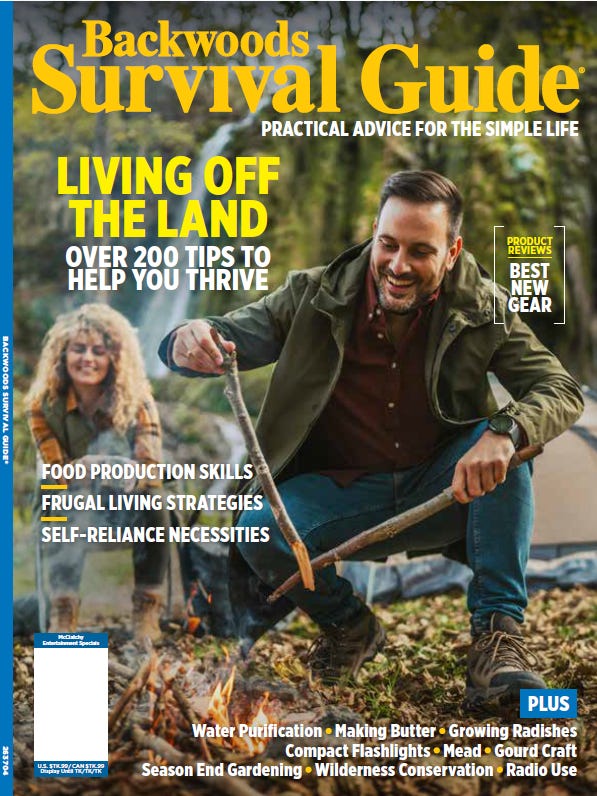
For those new to my little corner of the Internet, I am the Editor in Chief for Backwoods Survival Guide magazine. Here is the cover for the current issue available in stores right now.
You can find Backwoods Survival Guide just about anywhere magazines are sold, including:
Walmart
Publix
Walgreens
Rite Aid
CVS
Tractor Supply
Fleet Farm
Barnes & Noble
Questions, Comments, Complaints, Concerns?
I am always just an email away - jim@survivalweekly.com.